What to pack it in when you’re flying nonstop
A nonstop changes the packing math twice over. Your checked bag has no connection to miss, so checking one stops being the risk it is on an itinerary with a transfer — and you’re in the seat for a single longer stretch instead of two short ones, so what you brought to make that stretch bearable matters more. Here’s the gear that suits the way you’re actually flying — chosen on merit, with what to look for in each category so you can ignore our picks and buy something better.
As an Amazon Associate we earn from qualifying purchases. Links to Amazon on this page are affiliate links: if you buy something, we may earn a commission at no extra cost to you. We don't accept payment for placement — picks are chosen on merit and on what suits nonstop travel.
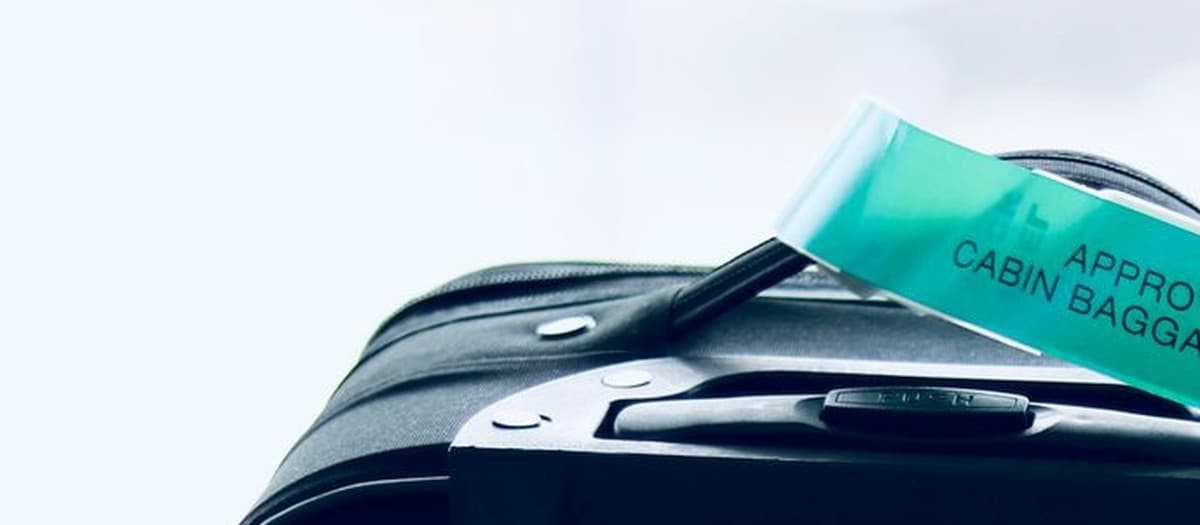
Carry-on suitcases
Carry-on is a bin problem, not a baggage-handling one — the bag is with you either way. What decides it on a nonstop is which aircraft is flying the route: plenty of nonstops are worked by regional jets with bins too small for a full-size roller, and the bag that never gets gate-checked is the one sized for the smallest plane on your itinerary.
What actually matters
- 22 x 14 x 9 in is the common US domestic ceiling — measure including wheels and handles, which is where most "carry-on" bags cheat.
- Regional jets on short nonstops have smaller bins; a 21 in spinner gate-checks far less often than a 22 in one.
- Spinner wheels roll easier in terminals; two inline wheels survive curbs and give you back an inch of packing depth.
- Softside expands and absorbs an overstuffed bin. Hardside protects fragile items and resists rain.
- Weight matters twice over: a lighter empty bag is more allowance for what's inside it, and it's the one spec airlines never enforce for you.
Travelpro Platinum Elite 21" Expandable Carry-On Spinner
The bag flight crews actually buy. Softside, expandable, with a self-aligning wheel system that keeps tracking straight down a jet bridge after years of abuse — the reason it keeps winning long-term durability testing rather than first-impression testing.
- Softside
- 21 in carry-on spinner
- Expandable
- Lifetime coverage
Travelpro Maxlite 5 21" Expandable Carry-On Spinner
The Platinum Elite's lighter, cheaper sibling. You give up some of the hardware and organization; you get one of the lightest softside carry-ons on the market, which is the spec that matters most on carriers that weigh cabin bags.
- Softside
- 21 in carry-on spinner
- Expandable
- Ultra-light frame
Samsonite Freeform Carry-On Spinner
Molded polypropylene that flexes instead of cracking, at a price where a scuff on the shell doesn't ruin your week. The pick when you're carrying anything that shouldn't get compressed by a bin full of other people's bags.
- Hardside polypropylene
- Carry-on spinner
- Recessed TSA lock
Checked bags
When you do check, a nonstop is where checked luggage is safest — the overwhelming majority of mishandled bags are misconnects, and a nonstop has none. Buy for the 50 lb limit and the baggage belt, not for looks.
What actually matters
- The 50 lb / 62 linear inch limit is the whole design brief. Every pound of empty bag is a pound of your stuff you can't bring.
- Wheels and handles fail first. Replaceable wheels and a real warranty outlive a prettier shell.
- Expansion zippers are how you turn one bag into two trips' worth — but expanded bags blow past 50 lb fast.
- Hardside for weatherproofing and fragile contents; softside for external pockets and squeezing into a packed trunk.
- Put a tracker inside before you hand it over — see the trackers section below.
Travelpro Platinum Elite Expandable Large Check-In Spinner
Same crew-grade build as the carry-on, scaled up: smooth self-aligning wheels loaded, deep organization inside, and the warranty coverage that makes a big bag a decade-long purchase rather than a two-year one.
- Softside
- Large check-in spinner
- Expandable
- Lifetime coverage
Travelpro Maxlite 5 Expandable Large Check-In Spinner
A large checked bag that starts near the bottom of the weight range for its size, which is the single most useful spec in a category governed by a hard weight cap. More clothes, fewer overweight-fee conversations at the counter.
- Softside
- Large check-in spinner
- Expandable
- Ultra-light frame
Samsonite Freeform Large Spinner
Generous capacity in a sealed hardside shell for close to budget money — the sensible choice if you check a bag twice a year and want it dry, closed, and unbothered on arrival.
- Hardside polypropylene
- Large spinner
- Recessed TSA lock
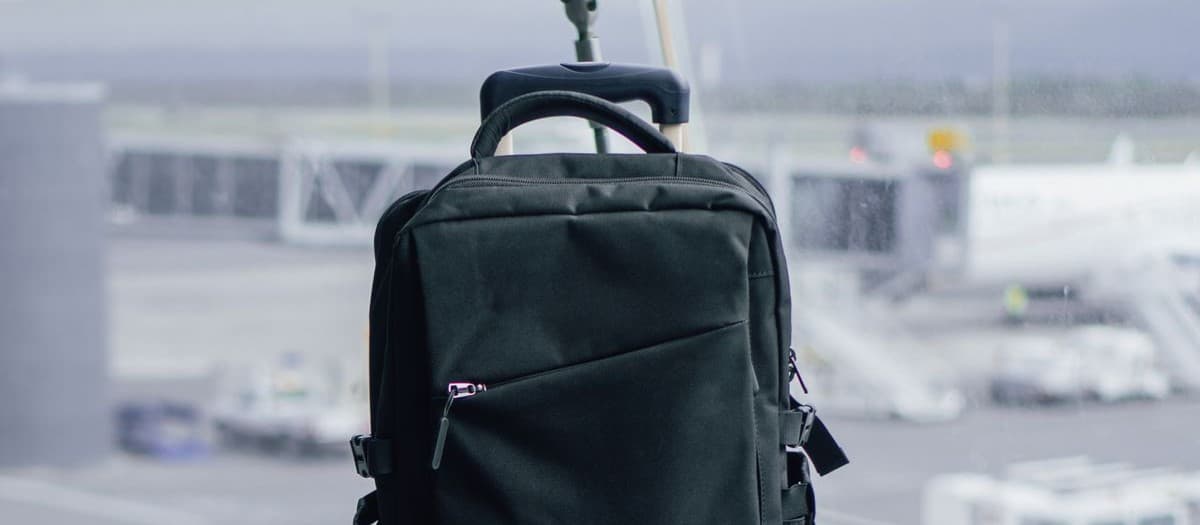
Personal-item bags
The free bag every fare includes — and on a basic-economy nonstop, often the only bag you get without paying. The whole game is maximum usable volume inside a shape that still slides under the seat in front of you.
What actually matters
- About 18 x 14 x 8 in is the typical under-seat allowance, and budget carriers measure it in a sizer at the gate.
- Structured, boxy bags use the space; round duffels waste the corners.
- A clamshell opening beats a top-loading backpack when you're living out of it for a weekend.
- A luggage pass-through strap saves your shoulder through long concourses.
- A laptop sleeve that reaches the bag's bottom edge will bang on the floor — look for a suspended one.
Cotopaxi Allpa 28L Travel Pack
A full clamshell that opens like a suitcase, with mesh compartments that make packing cubes redundant. Enough structure to hold its shape under a seat, enough capacity for a long weekend nonstop with no checked bag at all.
- 28L
- Approx. 19 x 12 x 9 in
- Full clamshell opening
- Laptop compartment
Travelpro Maxlite 5 Rolling Under-Seat Bag
For anyone who'd rather not carry anything. Rolls through the terminal, then fits the under-seat space instead of the overhead bin — which means you keep it at your feet and walk off the aircraft without waiting on the aisle.
- Approx. 17.5 x 14.5 x 8.5 in
- Wheeled
- Multiple compartments
Fjällräven Kånken Laptop Backpack
Comfortably under every personal-item limit, including the strict ones, and it doesn't look like travel gear when you're using it as a day bag at the other end. Simple, boxy, hard to wear out.
- Approx. 13.8 x 9.8 x 6.3 in
- Laptop sleeve
- Vinylon F fabric
Packing organization
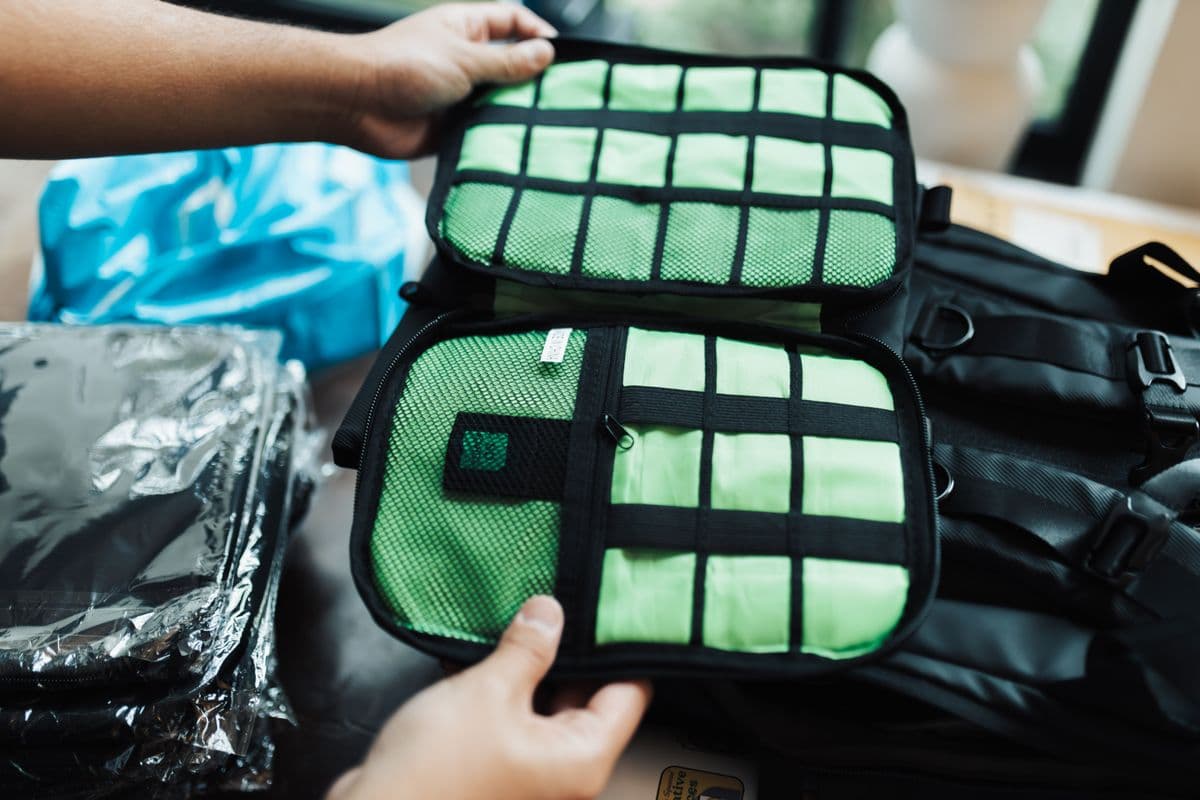
Cubes are what make carry-on-only actually work. They turn a suitcase from a pile into drawers, and compression versions buy back the volume that lets a week fit in a 21-inch bag.
What actually matters
- Compression cubes have a second zipper that squeezes air out — the real capacity gain over plain cubes.
- Compression saves space, not weight. On a weight-limited fare it buys you nothing.
- Match cube sizes to your bag's footprint; mismatched sets leave dead space at the edges.
- One cube reserved for worn clothes keeps the return trip from contaminating everything.
- Zippers are the failure point. Chunky, self-repairing zippers are worth paying for.
Thule Compression Packing Cube Set
Compression that actually compresses, in a set sized for real carry-on interiors, with the build quality to survive being stuffed and crushed on every trip rather than the first ten.
- Compression zipper
- Multi-size set
Eagle Creek Pack-It Reveal Cube Set
Mesh tops mean you find the shirt without unpacking the cube — the small thing that decides whether you keep using cubes after trip three. Light, well-shaped, and long-warrantied.
- Mesh-top visibility
- Multi-size set
- Lightweight ripstop
Bagail 6-Piece Packing Cube Set
The set that proves the concept for the price of a terminal sandwich. Not the last cubes you'll buy, but the ones that convince you cubes were the answer.
- 6-piece set
- Mesh panels
Onboard comfort
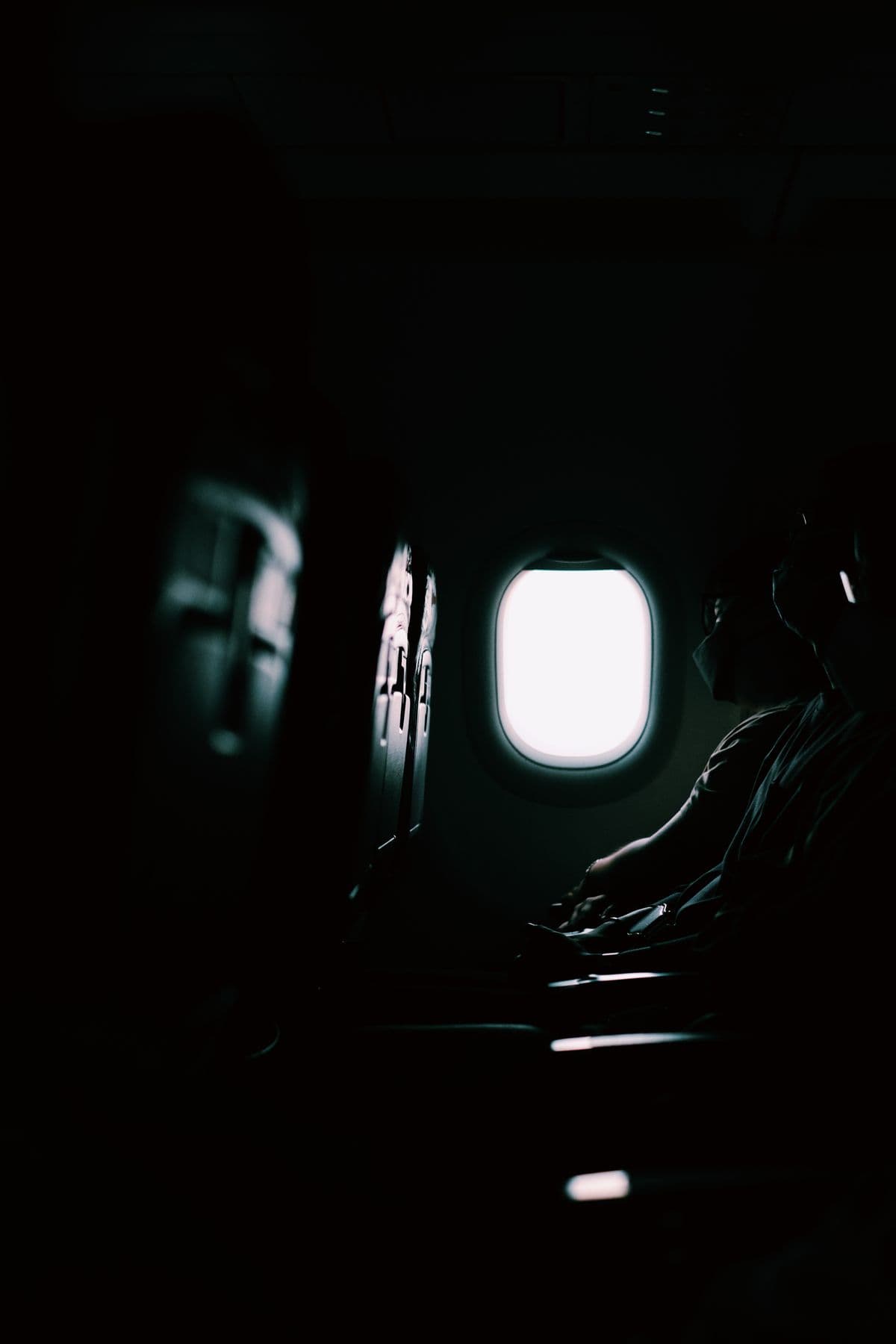
A nonstop trades connection stress for one longer stretch in the seat. The gear that matters is whatever makes hours 2 through 5 tolerable — sleep, circulation, and blocking out the cabin.
What actually matters
- Neck pillows fail by letting your head drop forward; the ones that work brace the side of your neck.
- Graduated compression (roughly 15–20 mmHg) is the range recommended for flights; higher isn't automatically better.
- Move and hydrate on any flight over a couple of hours — socks help circulation, they don't replace standing up.
- A mask that blocks light without pressing on your eyelids is the difference between resting and just lying there.
- Anything you want mid-flight belongs in the personal item, not the overhead bin.
Trtl Travel Pillow
A hidden internal brace inside a scarf, which is why it holds your head up instead of just padding it. Packs flatter than a paperback and straps to a bag strap rather than eating personal-item volume.
- Internal support frame
- Packs flat
- Machine washable wrap
Physix Gear Graduated Compression Socks (15–20 mmHg)
The cheapest meaningful upgrade to a long seated flight. Graduated compression in the flight-appropriate range, in a sock you'll actually wear rather than a medical-looking one you won't.
- 15–20 mmHg graduated
- Moisture-wicking
- Unisex sizing
Manta Sleep Mask
Moveable eye cups seal against your face and leave your eyelids untouched, so you get true blackout on a daytime nonstop without the pressure that makes cheap masks unbearable after twenty minutes.
- Adjustable eye cups
- Zero eye pressure
- Full blackout
Power and charging
Seat power is a coin flip on the regional aircraft that fly a lot of nonstops. Assume there's no outlet and you'll never care whether there was.
What actually matters
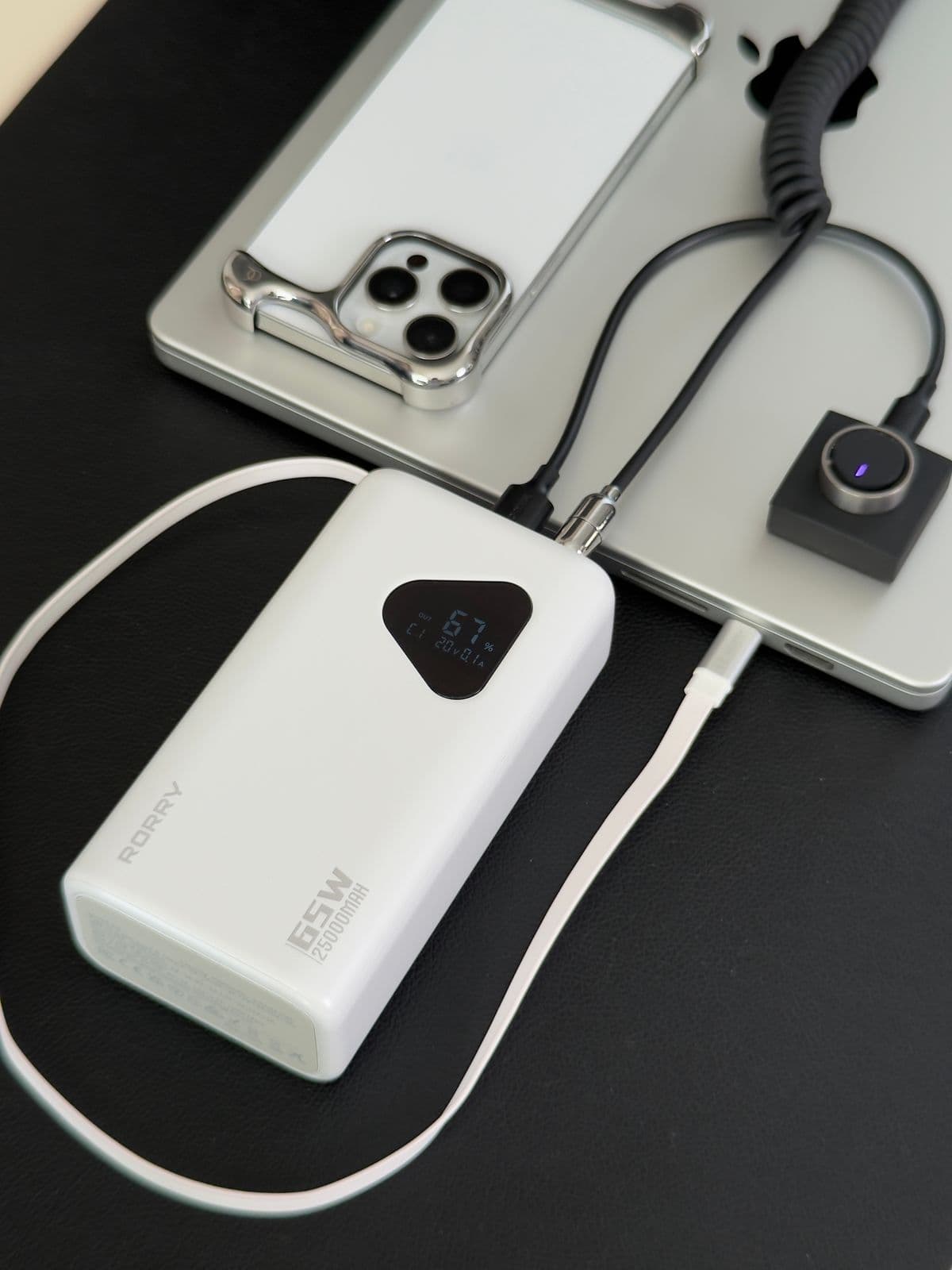
- Power banks must fly in the cabin, never in checked baggage — and several airlines now require them kept visible, not in the seat pocket.
- The usual limit is 100 Wh (roughly 27,000 mAh) per bank without airline approval.
- 10,000 mAh is the sweet spot: about two phone charges, still pocketable.
- One GaN wall charger with three ports replaces the bag of bricks.
- For international nonstops, check plug type and voltage — an adapter changes the pin shape, not the voltage.
Anker PowerCore 10000 Portable Charger
Small enough to forget in a jacket pocket, big enough for roughly two phone charges, and comfortably under the airline watt-hour limit. The default answer for a decade for good reason.
- 10,000 mAh
- Well under the 100 Wh cabin limit
- Pocketable
Anker GaNPrime Multi-Port Wall Charger
One plug, three devices at full speed, in something the size of the single-device brick it replaces. In a hotel room with two accessible outlets, this is the difference between everything charged and choosing.
- GaN
- Multi-port USB-C/A
- Foldable prongs
EPICKA Universal Travel Adapter
Covers the plug shapes for most of the world in one unit, with its own USB ports so it doubles as the hotel-nightstand charger. One item instead of a bag of country-specific dongles.
- US/EU/UK/AU plugs
- Built-in USB ports
- Adapter only — not a voltage converter

Luggage trackers
A tracker doesn't stop a bag going missing — it ends the argument about where it is. On a nonstop that's usually a short conversation, because there's only one airport it could have stayed at.
What actually matters
- Trackers are approved in checked bags; they're low-power Bluetooth devices, not the lithium batteries airlines restrict.
- Coverage is the whole product: a tracker is only as good as the crowd-sourced network of phones near it.
- Take a photo of your bag and tag at check-in — with a tracker location, that's most of a successful claim.
- One in the checked bag, one in the carry-on. The second is for the taxi you left it in.
- Replaceable coin-cell batteries beat sealed ones for something that lives in a suitcase.
Apple AirTag
The Find My network is enormous, which is the only spec that matters when your bag is in a baggage room three states away. Precision Finding gets you the last few feet once you're close.
- Find My network
- Replaceable coin cell
- Precision Finding on supported iPhones
Tile Mate
The practical cross-platform answer. Smaller network than Apple's, but it works the same on either phone and doesn't lock you into an ecosystem to find your suitcase.
- iOS + Android
- Bluetooth range finding
- Keyring hole
Chipolo POP
Works with Apple's Find My or Google's Find Hub, so one tracker covers a household that isn't all on the same phone — and a loud speaker for the in-the-house half of the problem.
- Apple Find My or Google Find Hub
- Loud speaker
- Replaceable battery
Toiletries and liquids
The security bin is where carry-on-only plans die. Solve liquids once and the rest of packing light stops being an argument with yourself.
What actually matters
- The rule is containers of 3.4 oz / 100 ml or less, in one quart-sized bag, one bag per traveler.
- TSA PreCheck and newer scanners often let liquids stay packed — but plan for the airport that doesn't.
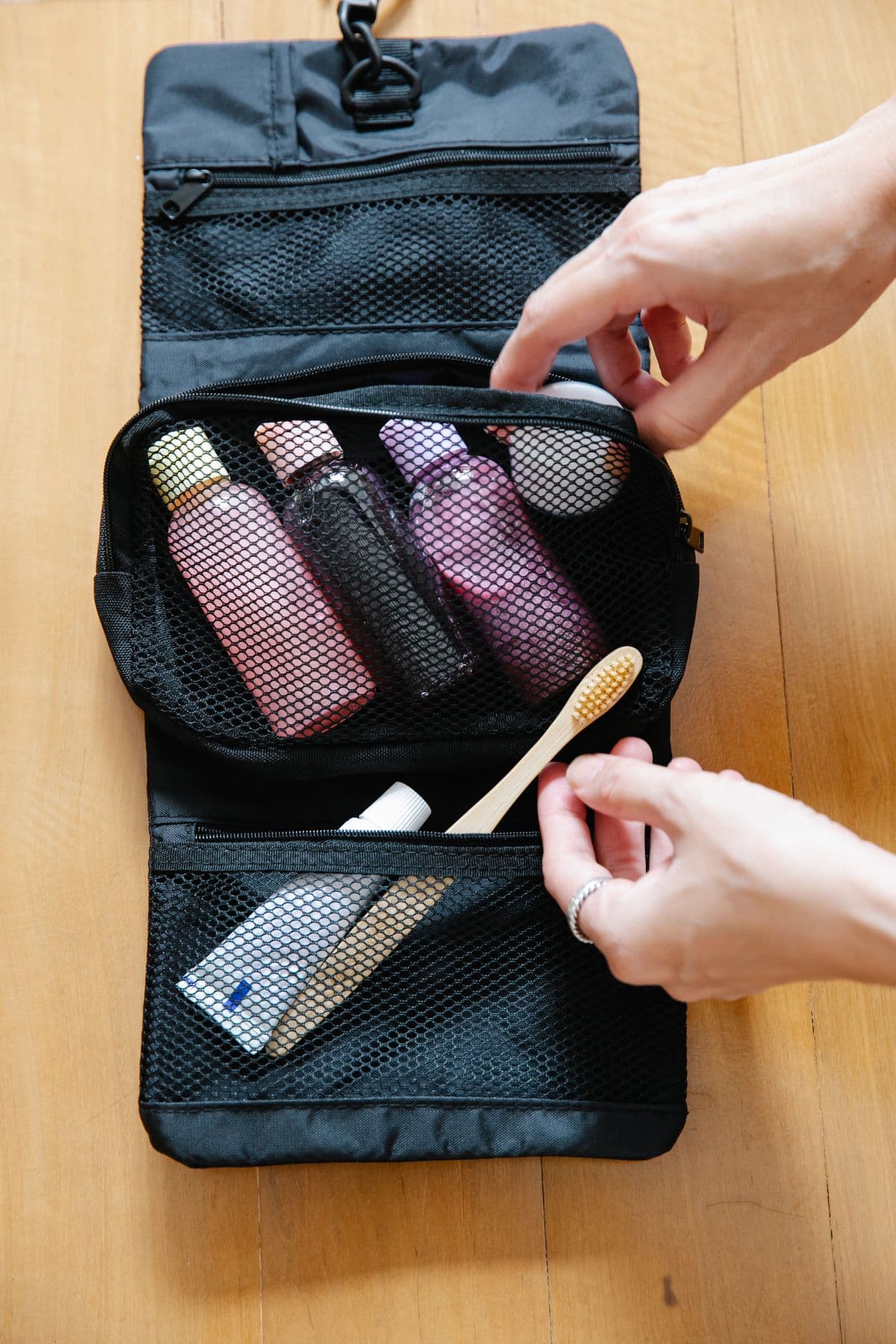
- A hanging bag is worth it the first time you meet a hotel bathroom with no counter.
- Decant into leakproof silicone rather than buying travel sizes of everything forever.
- Solid versions — bar shampoo, toothpaste tabs — aren't liquids at all and skip the whole rule.
BAGSMART Hanging Toiletry Bag
Hangs off a hook or a towel bar and turns any cramped hotel bathroom into usable space, with a removable clear pouch that goes straight into the security bin.
- Hanging hook
- Removable clear pouch
- Water-resistant lining
Cadence Capsules
Magnetic, genuinely leakproof capsules that snap into a tile instead of rolling loose. The fix for the pill bottle, the moisturizer, and the three things you always forget you needed.
- Magnetic, stackable
- Leakproof
- Under 3.4 oz each
Generic TSA-Approved Silicone Travel Bottles
Squeezable, refillable, and cheap enough to keep a permanently packed set. Solves 90% of the liquids problem for the price of one airport bottle of water.
- 3.4 oz / 100 ml
- Silicone squeeze
- Quart bag included on most sets
Questions travelers actually ask
What size carry-on is allowed on most US airlines?
The common domestic ceiling is 22 x 14 x 9 inches including wheels and handles. Most airlines don't measure unless the flight is full, but the sizer at the gate is the size that counts — and regional jets flying shorter nonstops have smaller bins than mainline aircraft, so a 21-inch bag gate-checks far less often than a 22-inch one.
Can I put a power bank in a checked bag?
No. Lithium power banks must travel in the cabin, never in checked baggage, and a number of airlines now also require them to stay visible rather than in a seat pocket or overhead bin. The usual limit without airline approval is 100 watt-hours, roughly 27,000 mAh, which every normal phone charger is comfortably under.
Are AirTags and Bluetooth trackers allowed in checked luggage?
Yes. They're low-power Bluetooth devices with coin-cell batteries, not the lithium batteries airlines restrict, and they're permitted in checked bags. A tracker won't stop a bag going missing, but it ends the argument about where it is — which on a nonstop is usually a short conversation, since there's only one airport it could have stayed at.
Is it safe to check a bag on a nonstop flight?
It's the safest time to check one. The large majority of mishandled bags are misconnects — bags that fail to make a transfer between flights — and a nonstop has no transfer. Your bag is loaded once and unloaded once, off the same aircraft you're sitting on. Checking a bag on a nonstop mostly costs you the wait at the carousel rather than the risk, which is why a nonstop is the trip to bring the bigger suitcase on.